Showing posts with label older people. Show all posts
Showing posts with label older people. Show all posts
Saturday, 2 May 2015
American official website summarises research on effective interventions with older people with disabilities
http://www.acl.gov/Programs/CDAP/OPE/ADEPP.aspx

Thursday, 30 April 2015
Older people should listen to upbeat music to think quicker
https://www.psychologytoday.com/blog/memory-medic/201504/musics-effects-cognitive-function-the-elderly
Sunday, 12 April 2015
Another example of an older person being creative in her living.
http://www.housebeautiful.com/design-inspiration/house-tours/a3595/russian-bottle-cap-house/
Wednesday, 8 April 2015
Life expectancy falls for older people: is it austerity, their smoking history or a blip?
http://www.theguardian.com/society/2015/apr/07/life-expectancy-falls-older-uk-women-public-health-england?CMP=EMCSOCEML657
Monday, 20 October 2014
It's good that younger people take older people out

Isn't it great how often younger people take an older person out for a good time?
Tuesday, 4 March 2014
Older people should have a stimulating life even if they need care
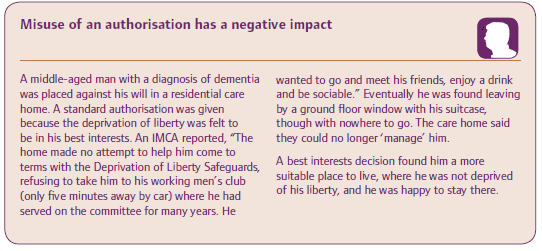
This comes from the annual Care Quality Commission review of the operation of the Deprivation of Liberty Safeguards. The development of these safeguards has been going very slowly, and it is suspected that a lot of care homes and hospitals are breaking the law. It seems that, while there is some good practice, there are still a lot of people who do not know about the safeguards, and so cannot operate them correctly. Although there is confusion about what deprivation of liberty is, what the DoLS scheme does is force you to think it through. The CQC review provides a lot of interesting case studies and citations to recent legal cases, and comprehensive links to guidance.
Link to the CQC review.
Thursday, 27 February 2014
Governments don't collect data about older people, so they can't plan for their needs
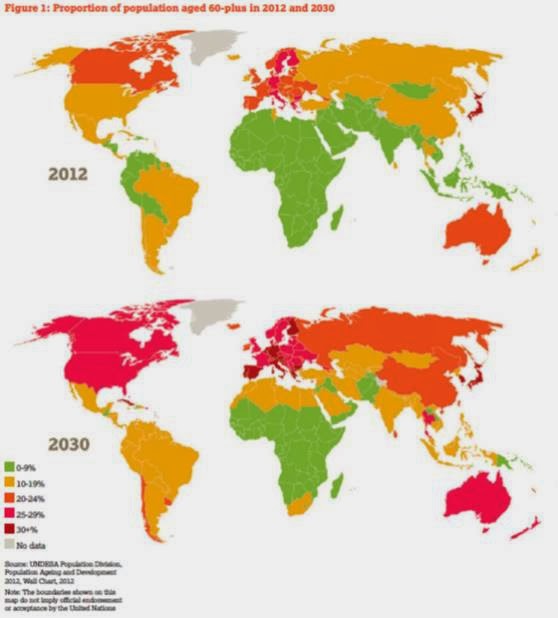
Link to HelpAge download site, so that you can look at the briefing.
Monday, 27 January 2014
Help in controlling blood pressure - it's a right that should be available everywhere

Link to the HelpAge report - scroll down for the survey presentation.
Wednesday, 15 January 2014
Value the character and life experience in the faces of older people


Two pictures of older people on the Soller tram in Mallorca; I took them on holday recently. Aren't they full of character? Aren't these people who are engaged and involved in their local community? Why take only pictures of the young with their life and character still to form?
Thursday, 5 September 2013
Big care services can be human, even if they are not small and local
I I'm always irritated by articles by top people in commercial organisations, when the main purpose of publishing it seems to be to promote how enlightened they and their organisations are without of course doing anything vulgar (and expensive) like actually advertising (the puff for the writer's organisation is about halfway down this one). However, this recent article on The Guardian's website makes an interesting point. It suggests that social services departments in commissioning services find it too easy to contract with big providers, rather than smaller, local services that might be a bit more human-sized and responsive to local circumstances. I actually think that it's possible to over-egg the argument about local is best. Expertise, flexibility and responsiveness is best, and professional services can do that if they're well-run, big or small.
I'm always irritated by articles by top people in commercial organisations, when the main purpose of publishing it seems to be to promote how enlightened they and their organisations are without of course doing anything vulgar (and expensive) like actually advertising (the puff for the writer's organisation is about halfway down this one). However, this recent article on The Guardian's website makes an interesting point. It suggests that social services departments in commissioning services find it too easy to contract with big providers, rather than smaller, local services that might be a bit more human-sized and responsive to local circumstances. I actually think that it's possible to over-egg the argument about local is best. Expertise, flexibility and responsiveness is best, and professional services can do that if they're well-run, big or small. Thursday, 11 April 2013
Skill-building for older people, so that they can take control

A positive skill-building approach to working with older people, which recognises they can take control and can build their own contributions to the community; they don't have to have things done to them.
Link to the article.
Tuesday, 9 April 2013
Granny pods - keep older people in garden sheds


I'm intrigued by the American Association of Retired People promoting the idea of granny pods in your back garden. Yes, it allows older people to 'age in place' as the American jargon has it, but however luxurious this means keeping your older relative in a garden shed. Even more than with a 'granny annexe' it makes them very clearly subsidiary to the life of their younger relatives.
Thursday, 7 March 2013
Prevention: free older people's opportunities

You might be interested to see a 'less than 10 minutes' SCIE 'Social Care TV' film about various projects for promoting well-being for older people. There is also some talking-head stuff from Julien Forder at the Personal Social Services Research Unit about what constitutes prevention.
My comment is: we need to think carefully about prevention, because government tends to think of it as being about preventing them coming in for extra expenditure. But what it should be about is helping people attain the right lifestyle according to their own wishes. Is having lots of older people's clubs the right approach? It all looks a bit institutional here. It might be all right for some, but not for all. For some people, promoting involvement in the local pub may be more right. We're still thinking about organising things for people, rather than making it possible to free older people's opportunities.
Link to SCIE 'Social Care TV page on promoting well-being for older people
Wednesday, 30 January 2013
Sassies (single sexy and sixty or over): plan for the future as well as pulling the men

Trying to sort out my Clipboard site (where I post the odd comments on news of the day) I was reminded of this old Daily Mail article on Sassies: that is single, sexy and sixty (or over). Apparently, in 2010, women of this age were seeking lots of sexy fun.
My comment: I wonder what plans they're making for their possibly less active late-seventies and eighties. I don't want to pour cold water on the Daily Mail's opportunity to publish loads of attractive photos of beautiful women in their sixties, but this is a period when you can be zapping life and also planning for your future.
I recommend lasting powers of attorney, a funeral plan, a will and settling into an adaptable home where you can live well with a greater degree of disability. You can still go on pulling the men for a lot longer than your sixties, as any care home owner knows.
Link to my Clipboard site.
Friday, 18 January 2013
Department of Health needs a broader non-health view on older people's needs

Link to Department of Health announcement.
Tuesday, 15 January 2013
Just because you can make gadgets do complicated things is no reason why you should

Having recently bought a new telly, I can only endorse my son's view, expressed in his blog, that the plethora of information about technical products that you don't really understand makes it hard to make decisions about what to buy. I'm not surprised that older people feel they just don't want to know about all the new gadgets they might buy. My wife said we should get this telly with all the things it can do that make it so much more than a telly, because in a few years' time our grandchildren will not want to come to see us if our equipment will not meet their assumptions about the world. Already, our grandchildren are unable to comprehend why our telly can't just show everything they might want to see just when they want to see it.
Stuart Payne's blog on logistics.
It's a feature of old age that one's children's professional activity in completely incomprehensible worlds begins to eclipse one's own feeling of general social competence; I was never sure what logistics (you see it on the sides of lorries) was in general before my son got a job doing it, and I'm still not sure what he actually does; my mother had the same problem about social work. But I see from the blog that the old Sony telly that we used to watch a quarter of a century ago has formed his retail decision-making, so obviously parental behaviour does have long-term implications. It seems that modern domestic equipment, marvellous though it is in so may ways, is just too complicated even for younger people nowadays to keep up with. This is a sign of the rigidities of old age strike ever younger because today's world is so unnecessarily complicated.
I might worry that this why I've had to take so much stuff back after Christmas. But no, as I said to the young man who said he could help me with my wife's new gadget, it's not that I don't know how to make it work, because I can make my own work. It's just that because modern technology can, modern technology does and then it's made itself too complicated to work
Wednesday, 9 January 2013
Fuel poverty kills vulnerable people, including older people
I came across an intriguing report about fuel poverty among
older people (and other vulnerable people), written in 2011 for Friends of the
Earth, the environmental charity, by Sir Michael Marmot. You may wonder why FoE
are doing stuff on fuel poverty: their website connects this with energy efficiency
contributing to a good relationship between humanity and the environment. You
may also wonder how Marmot (a public health medic) comes to be writing all this
stuff: of course he doesn’t, he has a team paid for by sucking up research
grants from organisations which very broadly fit within his main research theme
that tackling health inequalities is a crucial part of improving health
nationally and internationally. Presumably, he looks at what they are doing and
so his signature on the report gives it added credibility.

It’s mainly a literature review, and it collects up some
very interesting figures. Among them, is this graph, which shows the excess
deaths in different years from 1999 to 2010 due to cold. The point is that, particularly
for older and other vulnerable people, cold is a real health hazard, and
therefore fuel poverty is an important issue. The NHS spends a lot of money treating
people for disease caused by poor heating in private sector housing, according
the a quotation from the Chief Medical Officer of the Department of Health in
the FoE report.

You are in fuel poverty if you spend more than 10% of your disposable
income on heating and lighting. There are three reasons for getting into fuel
poverty. Obviously one is how rich your household is; the rich can afford their
fuel. The other two are the cost of fuel and how well-insulated your house is.
Thursday, 3 January 2013
Older person too brisk for the young and their mobile phones

Returning failed Christmas gifts (a Kobo ereader, which acquaintance with
their website tells me have a lot of people are experiencing problems with) I am
caused to revise my ageist assumptions about how old people are slow in malls
and shopping street, always chuntering along without a thought for the busy.
As a older person myself, I'm obviously still too brisk, but this time for the young. I’ve come (I recognise this is equally ageist, but this time against the younger)
to be irritated by younger people, halted wherever they have decided they need to
adjust their mobile phones, without a thought for the passing flow of
pedestrians.
Thursday, 6 September 2012
Hospice and palliative care should be part of care for older people, not separate
I’m returning to Byran Driver’s comment, so I’ll mention
again how this comes about.
A comment, from Byran Driver,
has come in about a post a while ago on 19th July; the comment is
attached to the post, but I’ll reply in this new post:
I have recently been reading your blog and I was wondering if you could expand upon your point that you do not believe in palliative care and the hospice movement?
What I said was:
I don’t totally believe in palliative care and the hospice movement.
This was as part of one of my musings around the time that I
retired from working in a hospice (actually, St Christopher’s, the original
hospice of the ‘modern’ hospice movement). Link to St Christopher's Hospice
Yesterday, I talked about the priority I give to social work
in my life: this post is about palliative and hospice care. Although until
recently I’ve been working in a hospice, I have my doubts about hospices and
palliative care. The reasons are that I’m doubtful about hospices because I
think people should die in as natural a way as possible as part of their families
and community, not in some specially designated place. And I’m doubtful about
palliative care because it focuses on a small number of dying people who have a
major diagnosed illness so that they can be treated as a separate group, and as
a medical specialty it has displaced good community end-of-life care for
everyone who is coming up to the end of their lives. And especially older
people, who lose out because of palliative care’s emphasis on cancer and other
major illnesses, instead of supporting good community provision for all older
people that also includes the dying process.
Let’s start with hospices. Hospices started up based mainly
on a model of end-of-life care provision which came to be called ‘palliative
care’ and, when it became a medical specialty, ‘palliative medicine’. An
important strand in the founding their founding was the work of Dame Cicely Saunders
at St Christopher’s Hospice, in south London, where I worked. She looked at
care of people dying of cancer in hospital and community services during the
1950s and thought it was inadequate. She founded St Christopher’s to
demonstrate her ideas. Combined with many other people’s thinking and research
at the time, this led to an expansion of palliative care.
In the UK, this led many local volunteers who liked her
ideas to campaign and fund-raise for a local hospice. As the creation of many
different local voluntary organisations, they come in various shapes and sizes
but they all combine this idea of medical and nursing care to manage pain and
other difficult symptoms with concern for the psychological, social and
spiritual needs of the patients as they go through the dying process. Most of
the provision in the UK is still in local voluntary hospices.
The first point to make about this is that it is not the same
in many other countries. Many of them do palliative care mainly in hospitals or
mainly in the community visiting people in their own homes. There are lots of
hospices round the world, but putting up a specialised building is not easy or
always the best choice in many situations.
Neither would Dame Cicely be all that keen on a universal
adoption of this model. She founded an organisation and a building so that she
could experiment outside the main state system of healthcare in the UK. But her
aim was to influence all health and social care so that it dealt with the dying
process better. Her commitment was to good care of dying people, not necessarily
to create hospices.
And to some extent, setting up separate organisations and
buildings cuts off care of dying people from the mainstream of services, it
almost says: ‘To die well, you need some special place to die in.’ But no
health service was going to fund separate places to die in for most people, so this
is not the message we want to give. We need to say: ‘The dying process is
important to people and their families and we need to handle it well everywhere’.
Separating off places to die is unhelpful, but to get finance for an
experimental service, it helped to have a building with wonderful facilities,
because you have something to show people for their money. It’s an important
part of fund-raising. It also came at the time (the mid-1960s) when communes
and therapeutic communities were in fashion, so caring for people in special
buildings seemed a good idea. Now people are less keen on institutionalised care,
and we know it is difficult to keep up a good standard: just look at all the scandals
about care in hospitals and care homes.
The voluntary/charity/3rd sector organisation of
hospices is also unhelpful. They have to
raise funds (the National Health Services only provides a small proportion of
the costs – it varies but can be 30% or less). So they have to harp on about
how special they are, when really what we should be doing is making the
experience of dying special wherever it is. And they have to sell themselves by
claiming how important their role is, when really they should be cooperating
with the NHS to ensure that their role disappears.
Added to that, the selling process sentimentalises and
separates dying. It’s not normal life: it’s medical and that means it requires
professional help rather than being part of the normal life of the family. And
it has to be lovely, in a nice environment, with specially caring people.
Instead of which, the message should be, it’s a natural part of our lives that
we should prepare for and, given the proper community nursing and medical care,
any family can and should participate in the process in as natural a way as
possible.
Having hospices as charitable organisations also allows the government
to sentimentalise what ‘all these wonderful people’ do in this special way, and
allows them to avoid responsibility for ensuring that a really good general
service to help with the dying process is part of our health and social care
system. So it allows the Conservatives to tell us that the voluntary principle
is valuable, and part of the ‘big society’ that the Prime Minister likes to go
on about. Really what they mean is they love not having to pay for most of it.
Now I turn to palliative care.
Palliative care, and palliative medicine, as the medical
speciality is called, is a well-established form of healthcare practice,
building on the pioneering work of hospices. The assumptions underlying it are
that in advanced illness, expert management of symptoms, particularly but not
only pain, allows people to have the highest possible quality of life and
fulfil their life aims in the time they have left. I don’t object to that, but
I’d like to point out what it implies.
First, it creates a medical specialty around the care of
people with ‘advanced illness’, so that other doctors are expected to hand over
their patients once they are close to dying because the important thing becomes
caring for them sensitively, rather than active treatment. In this way, medicine
is avoiding the issue of balancing care as you die with treatment for your illness,
as though they were different things, whereas hey are actually two aspects of
people's lives who are living with serious illness. Some doctors can go on saying what they do is cure, because
they can leave the death bit to other doctors. It’s an example of the medical
profession dividing people up into specialities for their convenience, rather than
treating people in the round, so that they are not being realistic about what
is happening to their patients, and not listening to what their patients are
experiencing. Then there are disputes about handing over or not. But more
important, it means that patients on the other side of the divide are not
listened to with a curative mind in play. They are to be made comfortable, but
any wish of more treatment is ignored as unrealistic. Some people are not happy
that artificial nutrition and hydration (food and water) are withdrawn, but
this is presented as a technical issue: in palliative care, once a patient is
defined as having reached that stage, the policy is to withdraw feeding and
hydration tubes. It’s not that I disagree with that policy, it’s that the
division between the caring and treating is so sharply made, instead of one
medical team taking the responsibility for balancing the whole of their patients
and their family’s needs.
Second, palliative care as a healthcare specialty becomes
divided from care at the end of people’s lives. Palliative care specialists in
social and health care all tend to assume that this distinction is not
important: end-of-life care is really just a branch of palliative care. But palliative
care comes from the wrong direction. It’s about ‘advanced illness’ (that is, a
diagnosable illness that has got so bad they can identify the characteristics
of an end stage). A lot of government policy focuses on end-of-life care being
provided in the last year of life. But nobody knows when you’re going to die,
so how is care provided for people in this situation? Only if healthcare
professionals can say to themselves that within a year you are likely to be
dead. This is called the ‘surprise’ question: ‘Would you be surprised if this patient
was dead in 12 months?’ If they would not be surprised, you are regarded as in
the end-of-life category and might get some services.
But most people have not got a clear diagnosable illness,
and this stops all kinds of other services including the end of life into their
broader work. So social workers arranging for you to have some community care
at home don’t think about the reality, which is that if they’re providing this
help you are coming into that group of the population that ought to be thinking
about and planning for their deaths. Again, it encourages the separation out of
some special group as ‘end-of-life care’, instead of all the services balancing
the whole of your needs, including end-of-life, but also thinking about how you
want to carry on with your life tasks and whether the services they are
providing are helping you with that, rather than just parking you until you
come into the end-of-life category.
So for me, palliative care does not incorporate end-of-life care,
it obstructs end-of-life care achieving the kind of balance that it ought to
have in services for older people.
That’s why I have my doubts about hospices and palliative
care: their separation and sentimentalisation obstructs good end-of-life care
for everyone in the community.
Wednesday, 22 August 2012
Wrinkes are where the smiles were

Subscribe to:
Posts (Atom)