A friend is thinking about a care home, so we are looking at leaflets. It occurs to me that the proliferation of need for care homes is going to be a bonanza for older photographic models for the pics that all their leaflets need for grey-haired and slightly wrinkled but lively-looking and positive residents. All looking, I must say, more with-it that most care home residents I come across.
You'll have gathered that I've taken a gap from Greyamble blogging to do other things for a while, but I'm starting up more regularly again now.
Wednesday, 10 September 2014

Wednesday, 5 March 2014
Christian care home/bungalow scheme preserves scale and environment


Search 'care homes' to find previous posts on care provision in the Sutton area.
Tuesday, 4 March 2014
Older people should have a stimulating life even if they need care
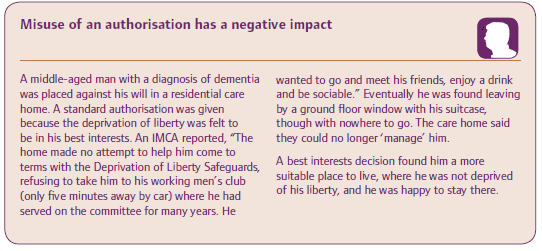
This comes from the annual Care Quality Commission review of the operation of the Deprivation of Liberty Safeguards. The development of these safeguards has been going very slowly, and it is suspected that a lot of care homes and hospitals are breaking the law. It seems that, while there is some good practice, there are still a lot of people who do not know about the safeguards, and so cannot operate them correctly. Although there is confusion about what deprivation of liberty is, what the DoLS scheme does is force you to think it through. The CQC review provides a lot of interesting case studies and citations to recent legal cases, and comprehensive links to guidance.
Link to the CQC review.
Monday, 3 March 2014
Why people with dementia should be involved in worship
 An interesting leaflet from MHA (the mainly Methodist organisation for housing and care for older people) and the CCOA (Christian Council on Aging) which I picked up while passing through a Methodist Home (this is what they call themselves; they seem to have dropped the word that the 'A' in the name originally stood for).
It is about worship and people with dementia, and is one of a number of leaflets about spirituality; the CCOA has a huge variety. The point is that although people with dementia may not have the same sophistication of appreciation of their Christianity that they once had, they can often appreciate the involvement in ritual that has been present for important parts of their lives. Worship for people with dementia, according to the leaflet, should be fairly brief, involving, use familiar materials and use well-known symbols, such as candles. Don't close your eyes when praying - it makes people feel cut off. the leaflet suggests suitable hymns and readings for particular themes.
Link to the leaflet on the MHA website (scroll down for downloads).
Thursday, 27 February 2014
Governments don't collect data about older people, so they can't plan for their needs
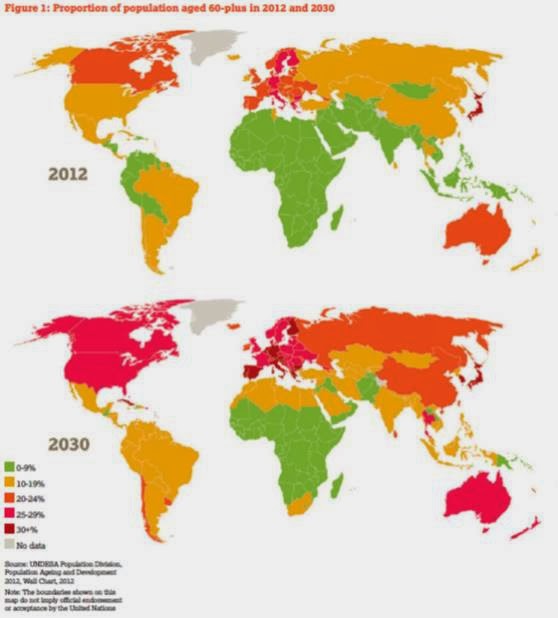
Link to HelpAge download site, so that you can look at the briefing.
Monday, 24 February 2014
Statistics on grandparent care

It’s always interesting to look through a pile of statistics.
The organisations Grandparents Plus and AgeUK dug through various reports on grandparents
providing childcare. Here are some highlights:
- The value of grandparental childcare in the UK in 2010/11 was £7.3 billion, up from £3.9 billion in 2004.
- In 2011, 28% of families where both parent work used grandparent childcare, 25% of lone parents, and 14% of non-working families.
- Nearly two thirds (63%) of all grandparents with grandchildren under 16 are providing some childcare, with one in five (19%) grandmothers providing at least 10 hours a week.
- Employment rates are lower for grandmothers than for women who are not grandmothers. While grandparents generally view providing childcare as a positive choice, there is some evidence of women giving up work to provide childcare.
- European data indicates that the grandmothers most likely to provide childcare are those who are younger, fit, healthy, and with young grandchildren.
The organisations say:
most informal childcare is provided by grandmothers aged 55 to 64 who are not working, because at the moment there are many more grandmothers in this group. However a significant minority of grandmothers are already combining work with childcare: and grandparents who are working are more likely to say they look after their grandchildren than those who are retired, reflecting the fact that working grandparents are generally younger and their grandchildren are also younger. As the proportion of working grandmothers increases, it will be of growing importance that they are able to combine work with supporting families through providing grandchild care, to avoid the emergence of a care gap.
Wednesday, 19 February 2014
Robot cleaners will lead to cuts in human contact in care homes and social care services

Which suggests to me that it will be a bit like having computers supplied to social workers over the last 20 years. Claims that it will lead to a reduction n paperwork proved to be nonsense. It just meant that the social workers had to do all the administrative work that was previously done by clerical workers. This led to extra stress for social workers and time taken from working with people and passed across to working with computers. It also led to cuts in the availability of routine clerical jobs for people with ordinary qualifications.
Robot cleaners will be the same. Once they're efficient and cheap, they will be used to cut routine staff from care homes, who provide a bit of extra humanity and human contact. And eventually they'll be handed out to older people in their own homes, so they will lose one of the little bits of human contact that they get from people doing their housework. And of course they'll also have to buy them or contribute to the cost, and won't have the alternative of opting for a human being, because that will be more expensive than a robot. And then, nobody will have a list of human cleaners, so the possibility will be lost anyway.
Link to the Guardian article.
Subscribe to:
Posts (Atom)